


Iliotibial Band Syndrome (ITB Syndrome)
Lateral knee pain has a reputation for being stubborn. People rest it, stretch it, foam roll it, strengthen it and often still find the pain returns at almost the exact same point of a run or walk. The reason is simple but rarely explained properly. The knee is usually not injured. It is being overloaded by something happening higher up the leg.
Iliotibial band syndrome is not a tearing injury and not arthritis. It is a compression problem. A thick band of connective tissue runs from the outside of the pelvis down to the shin bone. Each time the knee bends, that band presses firmly against the outside of the thigh bone. Normally the body tolerates this perfectly well, but when forces become excessive or poorly controlled the tissue underneath becomes irritated. The body responds with a sharp, localised pain on the outer knee that reliably stops activity.
Many patients initially worry they have damaged cartilage or a meniscus. That concern is understandable because the pain sits right at the knee joint. However the joint itself is usually healthy. Our overview of knee pain treatment explains how joint injuries behave very differently from overload conditions like ITB syndrome.
Why the Knee Becomes the Victim
The iliotibial band acts more like a tension cable than a moving structure. It stabilises the leg when your foot contacts the ground, particularly during single-leg loading such as running, stair descent and downhill walking. The moment the foot lands, the hip muscles are responsible for controlling how far the knee drops inward and how quickly the body weight transfers over the leg. When this control is even slightly delayed or fatigued, the band tightens dramatically and compresses the outer knee.
This explains the strange pattern many people describe. They feel fine at the start of activity, then gradually a precise ache develops, sharpens and forces them to stop. Minutes later it settles again, only to return at almost the same distance next time. The tissue is not failing randomly. It is reacting to a repeated mechanical threshold.
Because of this mechanism, focusing treatment only at the knee rarely works. The driver of the problem lives at the hip and pelvis where the load originates. A thorough physiotherapy assessment looks at the entire movement pattern rather than the sore spot alone.
https://wilstonphysiotherapy.com.au/physiotherapy/
The Gradual Build Up That Triggers Symptoms
Most cases develop after a subtle change rather than a dramatic injury. Increasing training volume is an obvious cause, but the more interesting triggers are the ones people rarely suspect. Downhill walking increases compression forces significantly because the knee spends longer in the critical bending angle. Cambered roads tilt the pelvis slightly and load one side repeatedly. Returning to exercise after a break reduces hip endurance long before fitness feels affected.
Cyclists often experience the condition after altering saddle height by only a few millimetres. The knee then reaches the compression angle thousands of times in a single ride. Even something as simple as fatigue near the end of a session can tip the balance. The hip muscles do not stop working, they just become fractionally slower, and that delay is enough to increase pressure in the outer knee with every step.
Why Stretching and Foam Rolling Only Help Temporarily
The iliotibial band is extremely dense connective tissue. It is designed for load transfer, not elasticity. When people stretch it aggressively they often feel short-term relief, but the sensation usually comes from surrounding muscles relaxing rather than the band lengthening. The compression point at the knee remains unchanged.
Foam rolling works in a similar way. It reduces protective muscle guarding and temporarily alters pain sensitivity. That is helpful for comfort but does not change the forces that caused the irritation. Once activity resumes, the same load pattern recreates the same symptoms.
Long-term improvement comes from altering the mechanics that tighten the band in the first place.
How Treatment Actually Solves the Problem
Management aims to calm the irritated tissue while retraining the movement pattern that overloaded it. Early on, modifying activity prevents the tissue from repeatedly flaring, but complete rest is rarely necessary and often delays recovery. The focus shifts quickly toward restoring control around the hip so the knee is no longer forced to absorb excessive compression.
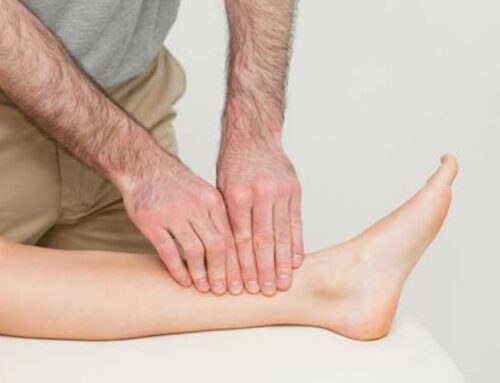
Hands-on therapy and remedial massage treatment are frequently used to reduce protective tension in surrounding muscles and allow normal movement to return.
https://wilstonphysiotherapy.com.au/massage/
For more reactive or persistent cases, acupuncture treatment can reduce sensitivity and make rehabilitation comfortable enough to progress effectively.
https://wilstonphysiotherapy.com.au/acupuncture/
Once the irritation settles, strengthening becomes specific rather than general. The goal is timing and endurance rather than maximum force production. When the hip muscles activate earlier and more consistently, the band stops tightening excessively and the knee no longer receives the repeated pressure that created the condition.
Why It Keeps Returning Without Correct Treatment
Many people manage to get temporarily pain free but flare again weeks later. This usually happens because symptoms improved before the movement pattern changed. The body compensated just enough for everyday activity but not enough for sustained load.
The brain remembers the efficient but faulty movement strategy. When fatigue appears or intensity increases, the old pattern returns automatically and the compression resumes. Proper rehabilitation replaces that pattern rather than just waiting for irritation to calm.
Expected Recovery
Recovery depends more on how long the pattern has existed than on how severe the pain feels. Recent onset cases often settle quickly once loading is modified and control improves. Long-standing cases take longer because the nervous system must relearn how to manage force through the leg.
The aim is not simply becoming pain free at rest but tolerating distance, speed and hills without recurrence. When the underlying mechanics are corrected, most people return to running, sport or long walks without needing ongoing taping, braces or rolling routines.
Persistent outer knee pain is rarely random. It is usually a predictable mechanical problem with a predictable solution once the source of load is identified and corrected.



Leave A Comment